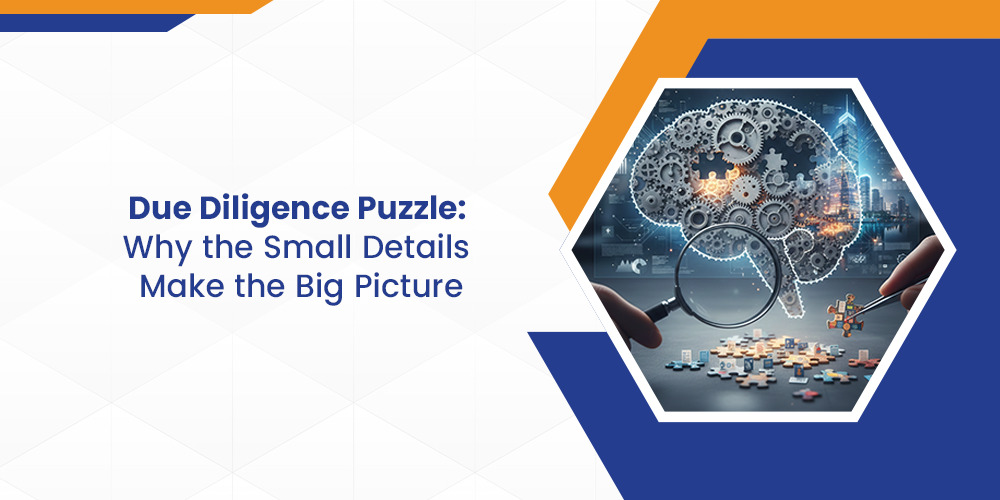
In the world of business deals and legal contracts, there is a silent hero that ensures everything stands on solid ground. We call it due diligence. To the outside observer, it might look like a mountain of paperwork and endless research. But for those of us who have seen deals succeed or fail, we know it’s actually a complex puzzle where every single piece must fit perfectly for a business to move forward with confidence.
Despite its importance, due diligence rarely gets the spotlight. We celebrate the closing of a deal or the signing of a major contract, but we often forget the experts who worked behind the scenes to make sure that path was clear of landmines.
If you ask ten different people, you’ll get ten different answers. Some will say it’s simply doing your homework. Others will give you a list of legal requirements. At Legal Assure, we like to think of it as taking the necessary steps to ensure that your future goes smoothly.
However, the simple definition hides a lot of complexity. The way we handle a check-up for a real estate deal is completely different from how we look at a tech startup or a manufacturing merger. It’s a 360-degree exercise. You cannot just look at a business from one angle and assume you know the whole story. You have to look at its history, its reputation, its culture of following the rules, and the people behind the scenes.
A common misconception is that when one party starts a deep investigation into another, it means there is a lack of trust. In reality, it’s the exact opposite. As some of the industry’s leading minds often say, it’s the difference between driving with your headlights on versus driving blind at night.
Think of a lawyer conducting due diligence like a doctor performing a diagnosis before writing a prescription. You wouldn’t want a doctor to guess what’s wrong with you, and you shouldn't guess when it comes to the health of your business. The goal isn't to find reasons to say no, but to find the clarity needed to say yes with total confidence.
Because modern business is so interconnected, no single person can do this alone. It takes a choreographed effort.
In India specifically, the rules change the moment you cross a state border. One state might have specific rules for labor laws, while another has different taxes or environmental permits. Because of this, we use specialist teams. We might have one group looking only at taxes, another at intellectual property, and another at past lawsuits.
These teams don't work in silos. They are constantly talking to each other. A discovery made by the tax team might impact what the contract team needs to write. It’s a collective effort where everyone is feeding information into a single, master list to ensure no risk is viewed in isolation.
The way we do this work has changed dramatically. I remember the days when lawyers had to travel to warehouses to manually inspect physical boxes of files. Today, that entire process happens in virtual data rooms.
These secure digital spaces allow us to review documents around the clock and track exactly who is seeing what. This technology hasn't just made us faster; it has raised the standard of what a proper investigation looks like. We can now ask more questions and spot patterns that would have been invisible to the human eye twenty years ago.
Even with the best technology, the process isn't without its hurdles. In the Indian context, records are often fragmented. There isn't always a single, unified digital system for property ownership or court records. Some archives are still sitting in physical files in local languages, requiring careful translation and interpretation.
Furthermore, many of our most successful family-run or legacy businesses grew on the basis of trust rather than formal contracts. When it comes time for a major deal, we often have to piece together information from multiple sources to create a clear picture of undocumented relationships or partnership arrangements.
As we look ahead, the role of the lawyer is shifting. We are moving away from being simple data reviewers and becoming risk strategists.
While technology will handle the heavy lifting of sorting through documents, the human element, the judgment call, is more important than ever. The future belongs to those who understand not just the law, but the commercial and geopolitical context of a deal.
At the end of the day, the essence of due diligence remains the same: making sure you know exactly where you stand and what is around you before you take that next big step.
Reference - https://law.asia/legal-due-diligence-process/