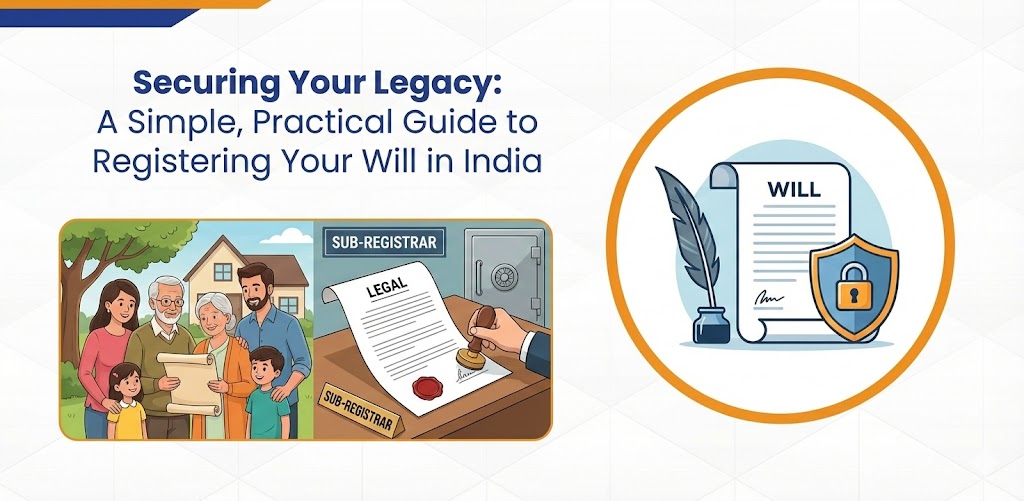
We spend our entire lives working hard, building a home, and looking after our families. It’s a journey of stewardship taking what we have and making it grow for the next generation. But as a seasoned consultant, I’ve seen that the most important part of this journey isn’t just what you build; it’s how you ensure it stays protected when you are no longer there to manage it.
Drafting a Will is a profound act of love and strategic planning. While many think it’s a complicated legal hurdle, it’s actually a very human process. It’s about giving your family a clear roadmap so they don’t have to deal with confusion or conflict during an emotional time.
Based on insights from industry experts at the Economic Times, let’s walk through the practical steps of registering your Will in India, simplified for real-world impact.
Technically, you don’t have to register a Will in India for it to be valid. However, from a critical-thinking perspective, registration is a non-negotiable step for anyone looking to mitigate risk.
Authenticity: It proves that you, and no one else, created the document.
Safety: A copy is kept in the government’s secure vault. If the original is lost or damaged, the registered version stands as the ultimate truth.
Peace of Mind: It makes the "probate" process (getting court approval) much smoother for your heirs.
You don’t need to be a lawyer to write a Will. You can write it on a plain sheet of paper. The goal is clarity, not complexity.
List your assets (property, bank accounts, jewelry).
Clearly state who gets what.
Use simple language. Avoid "legalese" that might be misinterpreted later.
You need two witnesses to sign the Will with you. Choose people you trust—perhaps friends who are younger than you. Their role is simple: they are there to confirm that they saw you sign the document and that you were in a healthy, sound state of mind when you did it.
Registration happens at the Sub-Registrar’s office, usually the one closest to where you live.
Book an Appointment: Most offices now allow you to schedule this online to save time.
Physical Presence: You and your two witnesses must go to the office in person. This is where the official "seal" of the government is applied.
To ensure a smooth "on-site" experience, make sure you have your "ducks in a row":
The Original Will: Plus a few photocopies.
Identity Proof: Your Aadhaar card or PAN card.
Photographs: Passport-sized photos of yourself and your witnesses.
Medical Certificate: If you are a senior citizen, I highly recommend getting a simple note from your family doctor stating you are of sound mind. It’s a small step that prevents huge disputes later.
The Sub-Registrar will verify your identity, ask a few simple questions, and then the document is officially recorded. You’ll pay a small registration fee (which is a tiny price to pay for the security it provides), and usually, within a few days, you can collect the registered document.
I often tell my clients that a Will is a "living" document. It should grow with you. If you buy a new property or if your family dynamics change, don't be afraid to update it.
At LegalAssure, we believe that legal processes should be approachable and human. We aren't just looking at papers; we are looking at people’s lives and legacies. Taking the time to register your Will today is a forward-thinking move that ensures your hard work continues to benefit those you care about most. If you’re ready to take this step, don't overthink it. Start with a simple draft, and let the process unfold. Your family's future peace of mind is the best ROI you’ll ever achieve. Need a hand getting started? We’re here to help you navigate this journey with clarity and care. Visit us at Legal Assure to learn more.
Reference - https://economictimes.indiatimes.com/defaultinterstitial.cms