Location: Pune, India
FAQ
enquiry@legalassure.in

Drop us a line

+91 9881908241

Make a call

Address

Head Office: Balewadi High Street, Pune

Branch Office: Pakharbaug, Bavdhan, Pune

Hc Upholds Will Bequeathing It To Another Family Member; Daughter Loses Claim To Gold Jewellery Kept In Joint Locker With Late Mother.

Hc Upholds Will Bequeathing It To Another Family Member; Daughter Loses Claim To Gold Jewellery Kept In Joint Locker With Late Mother.

In the realm of estate planning and family legacy, there is a common but profound misconception that holding a bank locker jointly with a parent guarantees ownership of the valuables within. A recent landmark decision by the Kerala High Court has once again underscored a critical principle: banking mandates are merely for operational convenience and do not override the sacredness of a formal will.

The Conflict: A Daughter’s Claim vs. a Mother’s Will

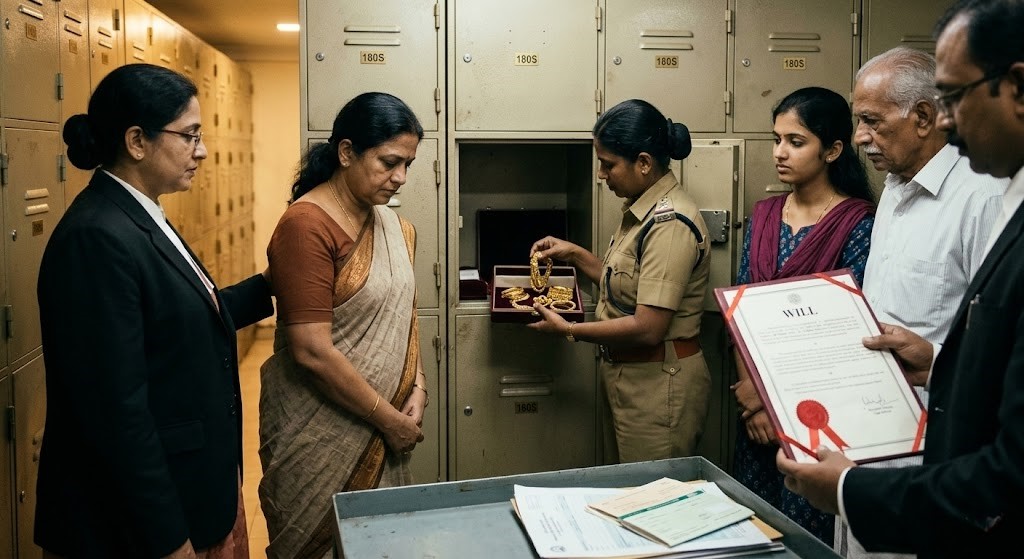
The case centred on a dispute involving approximately 180 sovereigns of gold ornaments kept in a Canara Bank locker. The locker was held jointly by a mother and her daughter under an "either or survivor" instruction. Following the mother's demise, the daughter claimed absolute ownership of the jewellery, citing both her status as a surviving joint holder and an alleged oral gift.

However, the legal landscape shifted when it was revealed that the mother had executed a registered will years prior. In this document, she had specifically bequeathed the gold to another family member, a decision made with clear intent and foresight.

The Judicial Perspective: Operational Authority vs. Beneficial Title

Justice Easwaran S., presiding over the matter, dismissed the daughter’s appeal. The Court clarified that the "either or survivor" clause is a tripartite agreement between the bank and the hirers intended only to facilitate the smooth management of the locker. It does not, by its mere existence, transfer ownership of the property stored inside.

The Court emphasised that the valuables in a locker are held in trust. While the bank allows the survivor to access the assets to avoid administrative paralysis, that survivor remains accountable to the true legal heirs or legatees named in a will. In this instance, the mother’s registered will was the definitive voice on her legacy, superseding any operational banking instructions.

Strategic Takeaways for Families

This ruling serves as a vital reminder for those of us focused on value-driven, long-term planning. It highlights several key realities of modern succession:

  • Registration Matters: The fact that the mother’s will was registered provided a level of authenticity that the daughter’s claim of an "oral gift" simply could not match.
  • Clarity Over Convenience: Never assume that adding a name to a bank locker is a substitute for a comprehensive estate plan.
  • Trustee Status: A survivor or nominee is often legally viewed as a mere "custodian" who must hand over assets to the rightful beneficiaries.

At a time when family dynamics are increasingly complex, relying on time-tested legal principles rather than banking shortcuts is the only way to ensure your wishes are truly respected.

FAQs

  1. Does a joint locker holder automatically own the jewellery inside after a death?
    No, the surviving holder typically acts as a trustee for the legal heirs and does not gain automatic ownership.
  2. Can a parent bequeath locker contents to a third party without the joint holder's consent?
    Yes, a legal owner has the absolute right to will their property to anyone without needing the consent of other locker hirers.
  3. Does a 'will' override a bank's nominee or survivor clause?
    Yes, a valid will takes precedence over bank operational mandates regarding the final distribution of assets.
  4. What is the legal status of an 'either or survivor' clause in a locker?
    It is an administrative instruction for operating the locker and does not determine the legal succession of the contents.
  5. Is a succession certificate needed to claim gold from a joint bank locker?
    While banks may allow access to survivors, a court-certified will or succession certificate may be required to settle ownership disputes.

Request a Callback

What More We Are Offering