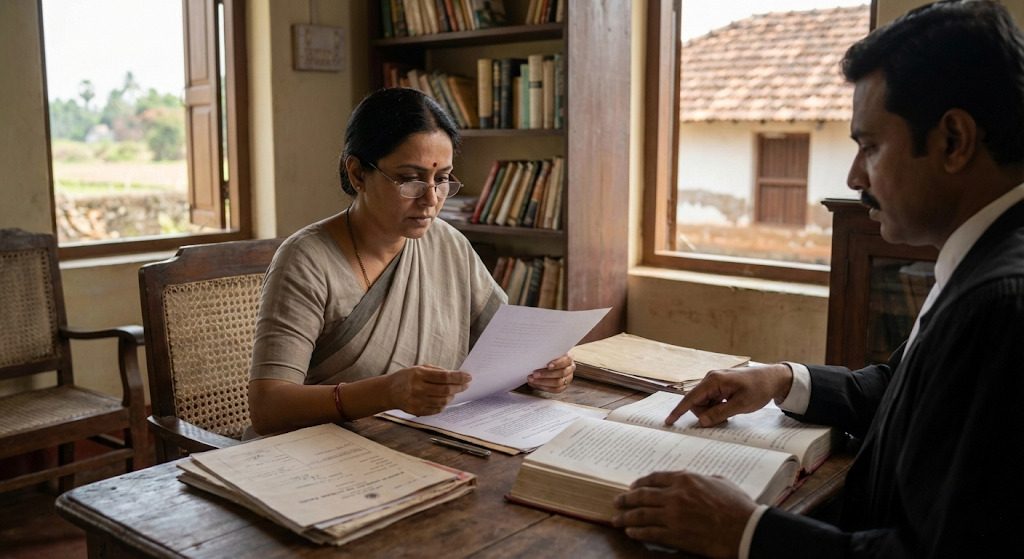
New Delhi – In a decisive judgment reinforcing the property rights of women, the Supreme Court of India has ruled that a daughter’s claim to her father’s property takes precedence over the sons of his brothers (nephews) if the father dies intestate (without a will).
This significant verdict clarifies that the rule applies even to property partitions finalised before the enactment of the Hindu Succession Act, 1956, marking a retrospective strengthening of inheritance rights.
The bench, comprising Justice S. Abdul Nazeer and Justice Krishna Murari, delivered a 51-page judgment setting aside a previous order by the Madras High Court. The High Court had earlier granted rights over a father’s self-acquired property and his share in partitioned joint family property to his brother's sons.
The case in question involved a property dispute from Tamil Nadu, where the father passed away intestate in 1949. The Supreme Court has now unequivocally stated that in such scenarios, the sole daughter is the rightful legal heir, overriding the claims of the father’s nephews.
Priority of Succession: If a male member of a joint family dies without a will, his property devolves upon his daughter in the absence of a son, rather than shifting to his brothers or their sons.
Retrospective Application: The ruling confirms that these rights extend to partitions and successions that occurred prior to 1956, ensuring that historical injustices in property distribution can be legally contested.
Ancestral & Self-Acquired: The Court reiterated that daughters possess equal rights alongside sons in both ancestral and self-acquired assets.
This judgment serves as a critical precedent for pending litigation across lower courts. By validating women's property rights under both modern statutes and earlier customary laws, the Supreme Court has effectively closed a loophole often used to bypass female heirs in joint family setups.
For families and legal practitioners, this underscores the necessity of clear estate planning. However, in the absence of a will, the law now stands firmly on the side of the daughter as the primary successor.