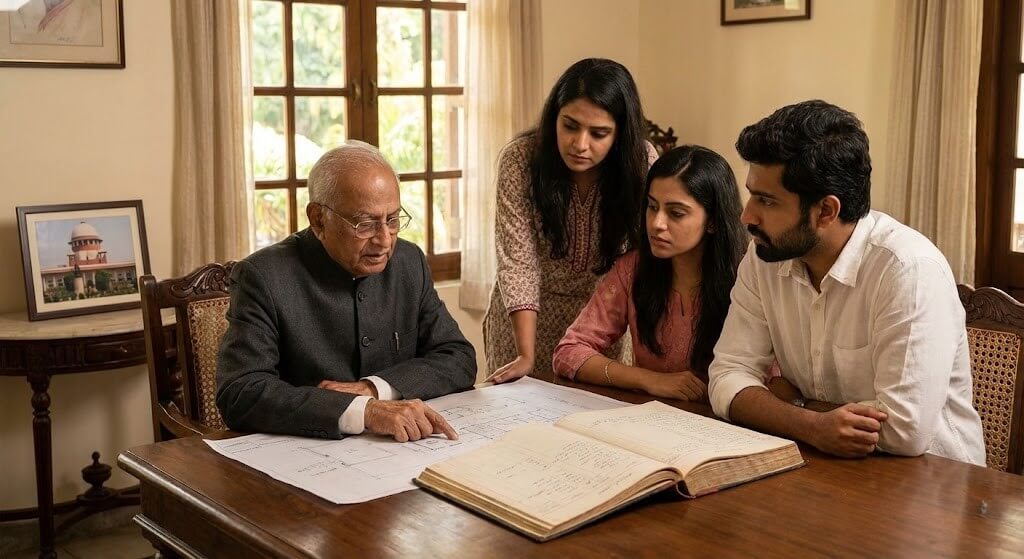
In the complex landscape of Indian succession and asset management, the role of the Karta has always been one of profound fiduciary responsibility. A recent, landmark clarification from the Supreme Court has underscored a fundamental principle that many families often overlook in the heat of rapid expansion: the legal presumption that assets acquired by the head of a Hindu Undivided Family (HUF) belong to the collective, not the individual.
For those of us who value the sanctity of family legacy and the stability of long-term wealth, this ruling is a necessary course correction. It reminds us that institutional integrity begins at home.
The Supreme Court’s stance is a definitive signal to those navigating the nuances of ancestral wealth. The Court held that if a family possesses an "ancestral nucleus" a core foundation of family property or business income any new acquisition made by the Karta is viewed, by default, as a joint asset.
This isn't merely a legal technicality; it is a protection of the family’s collective interests. The law assumes that the Karta, acting as the manager of the estate, is utilizing the strength of the family’s existing resources to grow the portfolio. Therefore, the fruits of that growth belong to all stakeholders within the HUF.
From an operational standpoint, this ruling places a significant premium on transparency. The "burden of proof" has been placed squarely on the individual. If a Karta claims that a specific property is "self-acquired" and therefore separate from the family pool, they must demonstrate this with ironclad evidence.
They must prove that the purchase was made using independent funds salary, gifts, or personal investments that have no connection to the family’s ancestral nucleus. In the absence of such evidence, the default legal position will favor the joint family structure.
As consultants committed to real-world impact, we must look beyond the courtroom and focus on pre-emptive compliance. This ruling highlights three critical strategic actions for any family business head:
Segregation of Capital: Maintain a clear, impenetrable wall between personal earnings and family business revenue. Mixing these streams is a recipe for future litigation and the dilution of individual efforts.
Meticulous Record-Keeping: Documentation is the only defense against the legal presumption of joint ownership. Ensure that the "pedigree of the funds" is recorded at the moment of every transaction.
Proactive Communication: Openness with family members about which assets are personal and which are collective fosters an environment of trust. It prevents the "human element" of resentment from triggering legal battles years down the line.
At LegalAssure, we believe that time-tested principles like the HUF structure are not relics of the past but robust frameworks for building multi-generational wealth. However, these structures require a modern, disciplined approach to management.
By respecting the Supreme Court’s emphasis on the joint nature of Karta-led acquisitions, we can build more resilient family institutions. We must move away from a mechanistic view of property and embrace a value-driven strategy that honors both individual contribution and collective legacy.
True leadership within a family is not just about growing the estate; it is about ensuring that the growth is built on a foundation of legal certainty and mutual respect. Let us ensure that our professional and personal legacies are as solid as the foundations we lay today.
Reference - https://share.google/3hSlhYxwNFO0gTxMj