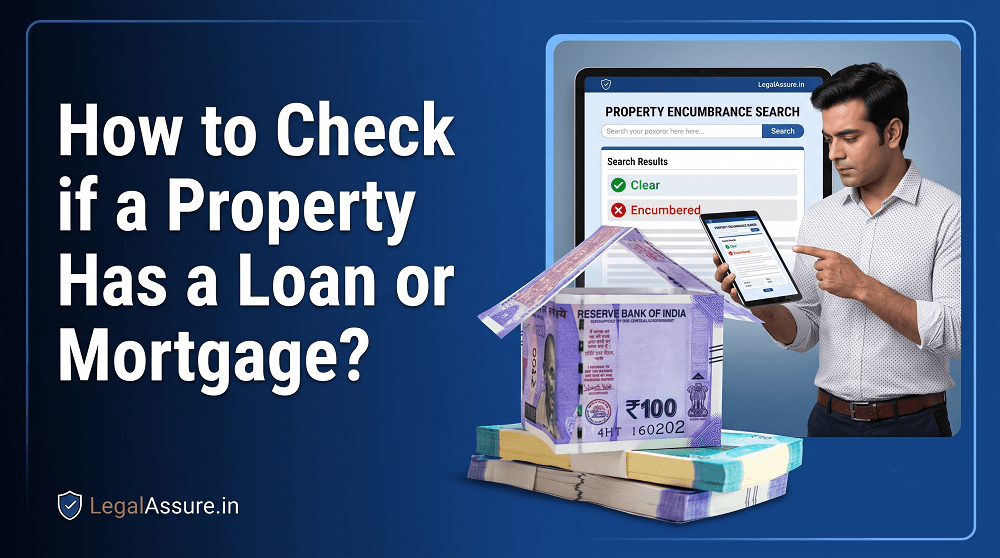
Imagine you have found a resale flat in Pune at a price that looks attractive. The seller tells you the property is completely loan-free, shows you the sale deed and asks you to pay a token amount to secure the deal.
Would you rely only on that statement?
Before buying a property, you should independently check whether it is subject to an existing loan, mortgage, charge, lien, attachment or another claim that could affect the transaction. An Encumbrance Certificate (EC) is an important part of this process, but it should not be treated as the only proof that a property is completely free from every possible claim.
A safer approach is to compare multiple records and documents before committing substantial money.
An unresolved mortgage or other claim can create complications when you try to register the property, obtain a home loan or sell it later.
For example, a seller may have an outstanding home loan but intend to close it from the sale proceeds. That does not automatically mean the property cannot be sold. However, the transaction needs to be structured properly, particularly where a lender's security interest is involved.
Similarly, an old mortgage may have been repaid but the supporting release or satisfaction documentation may not be properly reflected in the records you are reviewing.
That is why the question should not simply be, "Does the seller have a loan?"
The better question is:
"Are there any outstanding security interests, encumbrances or claims affecting this property, and have previous claims been properly discharged?"
People often use these terms interchangeably, but they have distinct meanings in property law.
Loan: The underlying financial obligation. It is the money borrowed from a financial institution.
Mortgage: The specific security interest created over immovable property to secure that debt. When taking a home loan, the borrower mortgages the flat to the lender.
Lien: A legal right to keep control over property until a debt is discharged. This can arise from unpaid taxes or court judgments.
Encumbrance: The broadest concept. An encumbrance covers any right, claim, or liability attached to a property that burdens the title. Every mortgage is an encumbrance, but an encumbrance could also be a lease or a restrictive society covenant.
Start by asking the seller for the documents relating to the property's ownership and transaction history.
Depending on the property, this can include:
If the seller says an earlier home loan has already been repaid, ask for supporting documentation rather than relying only on a verbal assurance.
The absence of original title documents can also be a reason to ask additional questions, particularly if the seller says a lender still holds them. However, document custody alone does not prove whether a property is mortgaged or loan-free.
An Encumbrance Certificate is one of the important records to examine when checking a property's registered transaction and encumbrance history.
Review the EC carefully for entries relating to mortgages, charges or other registered transactions. If a previous mortgage appears in the record, look for subsequent documentation or entries indicating its release, cancellation or satisfaction where applicable.
Also check whether the EC covers the relevant period and whether the property's identification details match the property you are purchasing.
Most importantly, do not interpret a "Nil" EC as a guarantee that there can be no other legal issue affecting the property. An EC is one part of due diligence, not a substitute for complete title verification.
CERSAI, the Central Registry of Securitisation Asset Reconstruction and Security Interest of India, is relevant when checking registered security interests created over property.
The CERSAI framework provides for a central database of security interests. It therefore serves a different verification purpose from reviewing registration records.
Where applicable, a buyer should check whether a security interest relating to the property has been registered and understand whether the record appears active, modified or satisfied.
A CERSAI result should not simply be accepted without comparison with the seller's loan and property documents. If the seller says a loan has been closed but a security interest appears unresolved, ask for clarification and supporting documents before proceeding.
Suppose the seller says:
"The loan was fully repaid two years ago."
Ask what documentation proves it.
Depending on the circumstances, relevant documents may include loan closure or no-dues documentation and documents relating to release, discharge or satisfaction of the lender's security interest.
The exact documentation can vary depending on the type of mortgage, lender and transaction structure.
If an existing lender is involved in the sale, the buyer should understand how the outstanding loan will be settled and how the lender's security interest will be released as part of the transaction.
Loan verification should not be separated from title verification.
Trace the ownership history:
Previous owner → Current seller → Proposed buyer
Review previous title documents to identify whether ownership was properly transferred and whether previous transactions contain unresolved issues.
For example, if the seller acquired the property from another person who had obtained a loan against it, you should understand whether that earlier security interest was properly discharged.
This is one reason a property title search is broader than simply checking whether the current seller says there is an outstanding loan.
A property may have issues that are not simply a conventional home loan.
Depending on the property and transaction, consider checking:
Not every possible claim will necessarily appear in one certificate or database.
For a Pune or PCMC resale property, the relevant records can also depend on the nature and location of the property. This is why the checks should be considered together rather than performed as isolated searches.
At this stage, the objective is to bring the information together.
An independent legal review can examine the title chain, EC, CERSAI findings, seller's documents, mortgage-related documents and other relevant records to identify inconsistencies or unresolved issues.
This becomes particularly useful when the property has changed hands several times, an earlier loan was involved, documents are missing or the seller's explanation does not fully match the available records.
For buyers in Pune, PCMC and elsewhere in Maharashtra, a proper property title search and legal verification can help identify issues before they become transaction problems.
A property with an outstanding loan is not necessarily impossible to sell.
In some transactions, the outstanding loan is settled as part of the sale process, with the lender involved and appropriate documentation obtained before or alongside the transfer.
The important point is that the buyer should understand how the existing lender's claim will be discharged.
Do not simply pay the seller and rely on a promise that the loan will be cleared later. The lender's requirements, payment flow, release documentation and registration process should be reviewed before proceeding.
If you're buying a property in Pune or Pimpri-Chinchwad, don't rely only on the seller's documents or a Nil EC before committing your money. LegalAssure provides property legal services in Pune, helping buyers with property title verification, property due diligence and document verification before a purchase. A professional review can help examine the ownership chain, registered encumbrances, mortgage-related records and other relevant property documents so that potential issues can be identified before you proceed with the transaction. For buyers dealing with a resale flat, house, land or other property in Maharashtra, independent legal verification can provide a clearer understanding of the property's legal status before signing the agreement or paying a substantial advance.
How can I check if a property has an existing home loan?
You can start by reviewing the property's Encumbrance Certificate, checking relevant CERSAI records, asking the seller for loan closure or mortgage-release documents and reviewing the title chain. These checks should be compared with one another because no single document or database necessarily establishes the complete legal position of a property.
Does an Encumbrance Certificate show all property loans?
Not necessarily. An EC is an important record for reviewing registered transactions and encumbrances covered by the relevant registration records, but it should not be treated as proof that every possible loan, claim or legal issue affecting a property is absent. CERSAI, title documents and other applicable records may also need to be reviewed.
How can I check if a property is mortgaged?
A buyer can review the EC, check applicable CERSAI records, examine the title documents and ask the seller for mortgage and lender-related documents. If a previous loan has been repaid, supporting closure, release or discharge documentation should also be reviewed to understand whether the lender's claim has been properly addressed.
What is CERSAI and why should a property buyer check it?
CERSAI is the Central Registry of Securitisation Asset Reconstruction and Security Interest of India. It maintains a central database relating to security interests covered by its legal framework. For a property buyer, a relevant CERSAI check can provide an additional source of information when assessing whether a security interest has been registered against the property.
Can I buy a property that still has an outstanding loan?
A property with an outstanding loan may sometimes be sold through a properly structured transaction involving the lender and appropriate documentation. The buyer should understand how the outstanding loan will be settled and how the lender's security interest will be released. Paying the seller based only on a promise to clear the loan later creates avoidable risk.
What documents prove that a property mortgage has been released?
Depending on the transaction and type of mortgage, relevant evidence can include loan closure or no-dues documentation and documents relating to release, discharge or satisfaction of the lender's security interest. The exact documentation can vary, so the buyer should verify the documents against the relevant property and registration records.